Summary
Smudged lenses make the world look softer than it is. A rinse, a drop of mild soap and a clean microfibre cloth keep glasses clear without wearing away the coatings.

Most people clean their glasses the quickest way available: a breath of warm air and a rub on the corner of a shirt. It feels harmless, yet over months that habit can leave fine scratches that scatter light and make it harder to see clearly, especially at night. A better routine takes less than a minute and protects the coatings you paid for.
Why lenses scratch so easily
Many modern lenses are made of plastic rather than glass and carry thin layers on top, such as anti-reflective, scratch-resistant or water-repellent coatings. Those layers are tough enough for normal wear, but they are not designed to be scrubbed while dry. Dust and skin particles act like fine sandpaper when you rub them across the surface, and fabrics such as cotton shirts or tissues can be rougher than they feel to the fingers.
What you need
- Lukewarm running water
- A drop of mild washing-up liquid without added lotion or strong scent
- A clean microfibre cloth, kept in the glasses case or a small bag
- Optional: a lens spray recommended by your optician for times when there is no sink nearby
The everyday method
- Wash your hands first. Clean hands stop you adding grease and grit to the frames.
- Rinse the glasses. Hold them under a gentle stream of lukewarm water to float off dust before anything touches the lenses. Hot water can harm some coatings, so keep it comfortably warm.
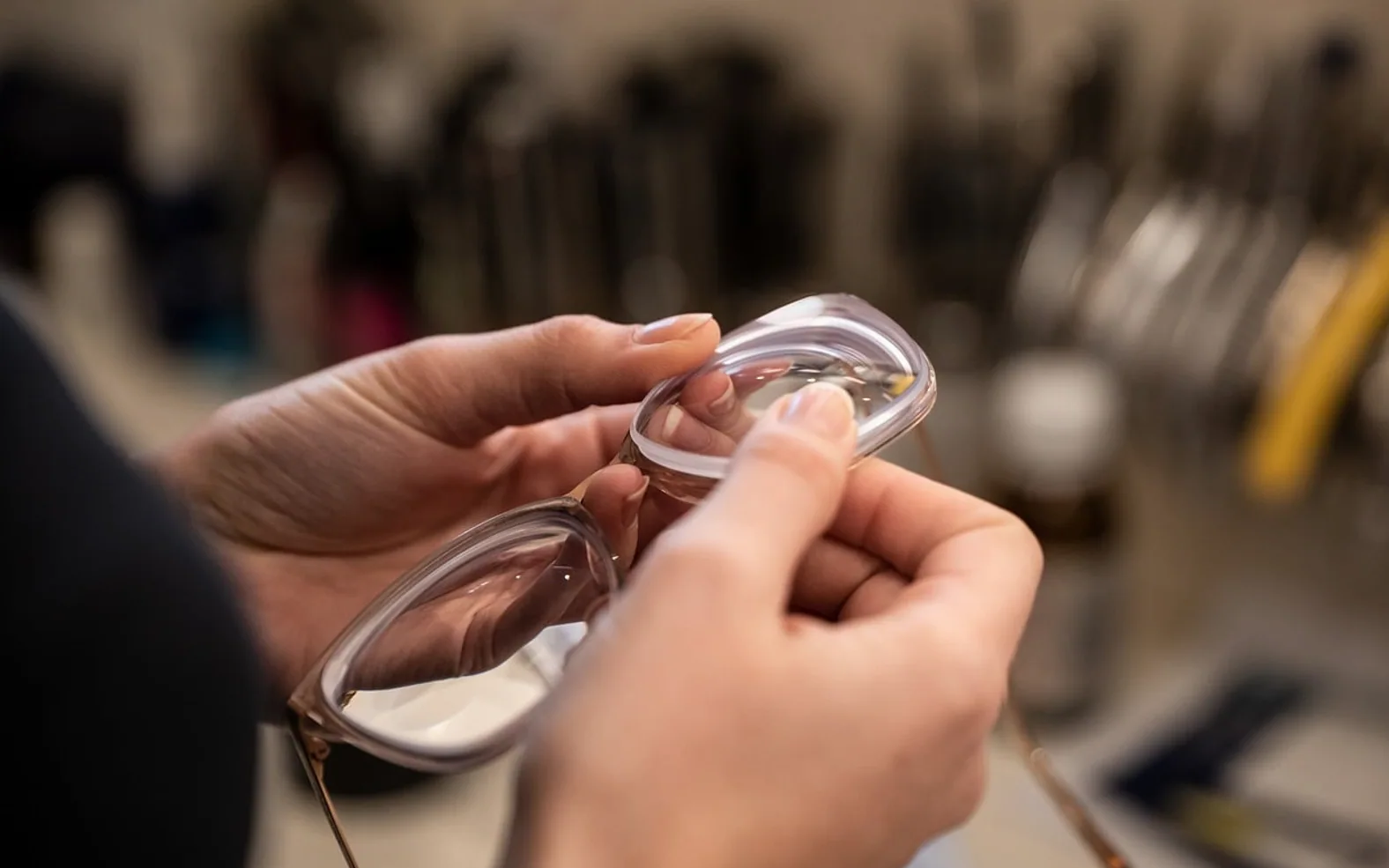
- Add a tiny drop of soap. Rub it lightly over both sides of each lens with your fingertips, then over the nose pads and the ends of the arms, where skin oils collect.
- Rinse again. Make sure no soap is left behind, as a film will leave streaks.
- Shake off the water. A gentle flick removes most of the drops.
- Dry with care. Pat the lenses with a clean microfibre cloth rather than scrubbing in circles. If water spots remain, a light final wipe usually clears them.
Cleaning on the move
Away from a sink, a lens spray and a clean microfibre cloth are the next best thing. Spray both sides, then wipe gently. If the lenses look dusty, blow the loose grit away first so you are not grinding it into the surface.
Habits that quietly damage lenses
| Common habit | Why it is a problem | Kinder option |
|---|---|---|
| Wiping on a shirt or scarf | Fabric traps grit and rubs it across the coating | Microfibre cloth, ideally after a rinse |
| Using kitchen roll or tissues | Paper fibres can be abrasive | Pat dry with microfibre |
| Household glass or window cleaner | Strong chemicals may strip coatings | Mild soap and water, or an optician-approved spray |
| Putting glasses down lens-first | The lenses take every bump on the table | Fold them and rest them on the arms, or use the case |
| Leaving them on a car dashboard | Heat can distort frames and damage coatings | Keep them in a case out of direct sun |
Looking after the cloth and the case
A microfibre cloth that has collected weeks of grease and grit stops helping. Wash it by hand in warm soapy water, rinse it well and let it dry in the air. Skip fabric softener, which leaves a coating that smears. Many people keep two cloths so there is always a fresh one. The inside of a hard case gathers dust too, so give it a wipe from time to time.
Frames, nose pads and hinges
Nose pads and the parts of the frame that touch the skin collect oil and make-up, and they can start to look cloudy. The soap and water routine handles most of it. Avoid poking at hinges with sharp tools; if a screw feels loose or the glasses sit crooked, an optician can usually adjust them quickly, often without charge.
When cleaning is not enough
If your lenses still look hazy after a careful wash, the coating may be worn or the surface scratched. No cleaning product can repair that, and some home remedies make it worse. Ask your optician whether new lenses are worth it.
Clean lenses also help with tired eyes at a screen; our guide on reducing eye strain from screens covers the other changes that help. And if your vision seems blurry even through spotless glasses, or you are holding things further away to read them, book an eye test. A change in prescription is common over time, and the optician can check the health of your eyes at the same visit.
See a doctor or eye casualty service urgently if you notice sudden changes in vision, a painful red eye, new flashes or floaters, or a shadow across part of your sight. Those need prompt attention, whatever the state of your glasses.
Small adjustments
Changes that cost a minute or less
Easy wins that are simple to keep up.
Mark the cuff
A dot of tape on the cuff shows where it sat last time, so the next reading starts the same way.
Tilt the monitor
Lowering the screen slightly lets your eyelids cover more of the eye.
Two cloths, not one
Keep a spare microfibre cloth so a clean one is always ready.
Check your bite
Lips together, teeth apart: a quick reset whenever you notice clenching.
Background reading only; your GP, pharmacist, dentist or optician can speak to your own circumstances.